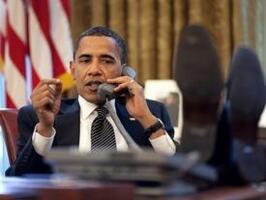
Voters Still Don't Like Congress' Top Leaders
They've all been reelected several times, but the four top congressional leaders remain an unpopular choice among voters nationwide.
Voters continue to doubt they’ll receive all their promised Medicare benefits, but they're less willing to raise the eligibility age to keep the program afloat.
The number of voters who think the country is heading in the right direction has fallen to its lowest level since mid-December.
Twenty-six percent (26%) of Likely U.S. Voters now think the country is heading in the right direction, according to a new Rasmussen Reports national telephone survey for the week ending April 23.
This finding is down six points from 32% the week before and down from 29% for the three weeks prior to that. The previous low for the year was 27% in mid-March. In January and February, 30% or more of voters said the country was heading in the right direction after generally being in the mid- to high 20s since mid-June 2013.
(Want a free daily e-mail update? If it's in the news, it's in our polls). Rasmussen Reports updates are also available on Twitter or Facebook.
The national telephone survey of 2,500 Likely Voters was conducted by Rasmussen Reports from April 19-23, 2015. The margin of sampling error for the survey is +/- 2 percentage points with a 95% level of confidence. Field work for all Rasmussen Reports surveys is conducted by Pulse Opinion Research, LLC. See methodology.

Crosstabs and historical data are available to Platinum Members only.
Most voters still don’t like Obamacare and want more freedom in their health insurance choices than the law currently gives them.
Fifty-four percent (54%) of Likely U.S. Voters view the national health care law unfavorably, with 37% who have a Very Unfavorable opinion of it. The latest Rasmussen Reports national telephone survey shows that 42% regard the law favorably, including 19% with a Very Favorable view. (To see survey question wording, click here.)
(Want a free daily e-mail update? If it's in the news, it's in our polls). Rasmussen Reports updates are also available on Twitter or Facebook.
The survey of 1,000 Likely Voters was conducted on April 23 and 26, 2015 by Rasmussen Reports. The margin of sampling error is +/- 3.0 percentage points with a 95% level of confidence. Field work for all Rasmussen Reports surveys is conducted by Pulse Opinion Research, LLC. See methodology.
Additional information from this survey and a full demographic breakdown are available to Platinum Members only.
Only 37% of Likely U.S. Voters think America’s best days are still to come. Not exactly a ringing endorsement for the nation’s future.
Surprisingly, that’s the highest level of “optimism” in two years. But 45% still think the country’s best days have already come and gone. Consider, too, that even in January 2004, just over two years after the 9/11 terrorist attacks, 48% still felt America’s best days were in the future, and only 35% believed they had already passed us by.
Republicans have a one-point lead on the latest Generic Congressional Ballot.
A new Rasmussen Reports national telephone survey for the week ending April 23 finds that 39% of Likely U.S. Voters would vote for the Republican candidate in their district's congressional race if the election were held today, while 38% would choose the Democrat instead. Twenty-two percent (22%) prefer a third-party candidate or are undecided.
(Want a free daily e-mail update? If it's in the news, it's in our polls). Rasmussen Reports updates are also available on Twitter or Facebook.
The national telephone survey of 2,500 Likely Voters was conducted by Rasmussen Reports from April 19-23, 2015. The margin of sampling error for the survey is +/- 2 percentage points with a 95% level of confidence. Field work for all Rasmussen Reports surveys is conducted by Pulse Opinion Research, LLC. See methodology.

Voters are a bit more optimistic about the future, but they still want less government in their lives.
A new Rasmussen Reports national telephone survey finds that 37% of Likely U.S. Voters now think America’s best days are in the future, up five points from January and the highest level of optimism in more than two years. But 45% still think the country’s best days have already come and gone. Eighteen percent (18%) are not sure. (To see survey question wording, click here.)
(Want a free daily e-mail update? If it's in the news, it's in our polls). Rasmussen Reports updates are also available on Twitter or Facebook.
The national telephone survey of 1,000 Likely Voters was conducted by Rasmussen Reports on April 13-14, 2015. The margin of sampling error for the survey is +/- 3 percentage points with a 95% level of confidence. Fieldwork for all Rasmussen Reports surveys is conducted by Pulse Opinion Research, LLC. See methodology.

Additional information from this survey and a full demographic breakdown are available to Platinum Members only.
Thirty-two percent (32%) of Likely U.S. Voters think the country is heading in the right direction, according to a new Rasmussen Reports national telephone survey for the week ending April 16.
This finding is up three points from 29% the previous three weeks. The number of voters who think the country is heading in the right direction has been 30% or higher most weeks since mid-December after generally being in the mid- to high 20s since mid-June 2013.
(Want a free daily e-mail update? If it's in the news, it's in our polls). Rasmussen Reports updates are also available on Twitter or Facebook.
The national telephone survey of 2,500 Likely Voters was conducted by Rasmussen Reports from April 12-16, 2015. The margin of sampling error for the survey is +/- 2 percentage points with a 95% level of confidence. Field work for all Rasmussen Reports surveys is conducted by Pulse Opinion Research, LLC. See methodology.

Crosstabs and historical data are available to Platinum Members only.
The number of voters who believe terrorists are winning the fight against the United States and its allies continues to grow, while views of Muslims in general and U.S. relations with the Islamic world have worsened.
A new Rasmussen Reports national telephone survey finds that just 29% of Likely U.S. Voters believe the United States and its allies are winning the War on Terror. That’s down from the 33% measured in March, but still above findings for most of last year. But now 39% think the terrorists are winning the war, up from 33% in the previous survey and the highest level of pessimism since the September 11, 2001 terror attacks. Twenty-five percent (25%) say neither side is winning. (To see survey question wording, click here.)
(Want a free daily e-mail update? If it's in the news, it's in our polls). Rasmussen Reports updates are also available on Twitter or Facebook.
The national survey of 1,000 Likely Voters was conducted on April 15-16, 2015 by Rasmussen Reports. The margin of sampling error is +/- 3 percentage points with a 95% level of confidence. Field work for all Rasmussen Reports surveys is conducted by Pulse Opinion Research, LLC. See methodology.

Additional information from this survey and a full demographic breakdown are available to Platinum Members only.
For the majority of Americans, the five-letter word “taxes” is dirtier than most words of the four-letter variety.
Republicans and Democrats are tied on the latest Generic Congressional Ballot.
A new Rasmussen Reports national telephone survey for the week ending April 16 finds that 39% of Likely U.S. Voters would vote for the Republican candidate in their district's congressional race if the election were held today, while another 39% would choose the Democrat instead. Twenty-three percent (23%) prefer a third-party candidate or are undecided.
(Want a free daily e-mail update? If it's in the news, it's in our polls). Rasmussen Reports updates are also available on Twitter or Facebook.
The national telephone survey of 2,500 Likely Voters was conducted by Rasmussen Reports from April 12-16, 2015. The margin of sampling error for the survey is +/- 2 percentage points with a 95% level of confidence. Field work for all Rasmussen Reports surveys is conducted by Pulse Opinion Research, LLC. See methodology.
Demographic details and trends for this survey are available for Platinum Members only.
Voters remain critical of the nation’s public schools and still strongly favor giving parents choices when it comes to their children's education.
A new Rasmussen Reports national telephone survey finds that just 29% of Likely U.S.Voters rate the performance of public schools in America today as good or excellent, while just as many (30%) rate it poorly. These attitudes have changed little in regular surveys since 2012. (To see survey question wording, click here.)
(Want a free daily e-mail update? If it's in the news, it's in our polls). Rasmussen Reports updates are also available on Twitter or Facebook.
The survey of 1,000 Likely Voters was conducted on April 7-8, 2015 by Rasmussen Reports. The margin of sampling error is +/- 3 percentage points with a 95% level of confidence. Field work for all Rasmussen Reports surveys is conducted by Pulse Opinion Research, LLC. See methodology.
Additional information from this survey and a full demographic breakdown are available to Platinum Members only.
Twenty-nine percent (29%) of Likely U.S. Voters think the country is heading in the right direction, according to a new Rasmussen Reports national telephone survey for the week ending April 9.
This finding is unchanged from the previous two weeks. Three weeks ago, 27% felt the country was heading in the right direction, the lowest level of confidence this year. The number of voters who think the country is heading in the right direction has been 30% or higher most weeks since mid-December after generally being in the mid- to high 20s since mid-June 2013.
(Want a free daily e-mail update? If it's in the news, it's in our polls). Rasmussen Reports updates are also available on Twitter or Facebook.
The national telephone survey of 2,500 Likely Voters was conducted by Rasmussen Reports from April 5-9, 2015. The margin of sampling error for the survey is +/- 2 percentage points with a 95% level of confidence. Field work for all Rasmussen Reports surveys is conducted by Pulse Opinion Research, LLC. See methodology.

Voters are increasingly critical of the health care they get and predict it will get even worse under the new national health care law.
The latest Rasmussen Reports national telephone survey finds that 70% of Likely U.S. Voters still rate the quality of the health care they receive as good or excellent. That’s down just one point from January but is the lowest finding in nearly two-and-a-half years of regular surveying. These positives have generally run in the high 70s and low 80s for most of this period but have been trending down since the first of the year.
Only six percent (6%), however, rate the care they get as poor, consistent with findings in past surveys. (To see survey question wording, click here.)
(Want a free daily e-mail update? If it's in the news, it's in our polls). Rasmussen Reports updates are also available on Twitter or Facebook.
The survey of 1,000 Likely Voters was conducted on April 9 and 12, 2015 by Rasmussen Reports. The margin of sampling error is +/- 3 percentage points with a 95% level of confidence. Field work for all Rasmussen Reports surveys is conducted by Pulse Opinion Research, LLC. See methodology.
If news reports are to be believed, Hillary Clinton will finally make it official this weekend and formally declare her candidacy for president of the United States.
Republicans are still ahead on the Generic Congressional Ballot.
A new Rasmussen Reports national telephone survey for the week ending April 9 finds that 40% of Likely U.S. Voters would vote for the Republican candidate in their district's congressional race if the election were held today, while 37% would choose the Democrat instead. Twenty-three percent (23%) prefer a third-party candidate or are undecided.
[Have we heard from you yet? The 2015 Rasmussen Reports reader survey is the most important poll we’ll take all year. Take the survey now--there are only a few days left!]
(Want a free daily e-mail update? If it's in the news, it's in our polls). Rasmussen Reports updates are also available on Twitter or Facebook.
The national telephone survey of 2,500 Likely Voters was conducted by Rasmussen Reports from April 5-9, 2015. The margin of sampling error for the survey is +/- 2 percentage points with a 95% level of confidence. Field work for all Rasmussen Reports surveys is conducted by Pulse Opinion Research, LLC. See methodology.

Voters remain conflicted over the construction of new nuclear plants in the United States and still tend to think that money would be better spent on new sources of energy.
A new Rasmussen Reports national telephone survey finds that 38% of Likely U.S. Voters think more nuclear power plants should be built in the United States, but just as many (38%) disagree. This shows little change from September. One-in-four (24%) are undecided. (To see survey question wording, click here.)
(Want a free daily e-mail update? If it's in the news, it's in our polls). Rasmussen Reports updates are also available on Twitter or Facebook.
The national survey of 1,000 Likely Voters was conducted on March 30-31, 2015 by Rasmussen Reports. The margin of sampling error is +/- 3 percentage points with a 95% level of confidence. Field work for all Rasmussen Reports surveys is conducted by Pulse Opinion Research, LLC. See methodology.

[Have we heard from you yet? The 2015 Rasmussen Reports reader survey is the most important poll we’ll take all year. Take the survey now.]
Twenty-nine percent (29%) of Likely U.S. Voters think the country is heading in the right direction, according to a new Rasmussen Reports national telephone survey for the week ending April 2.
This finding is unchanged from the previous week but up two points from the week before that which marked the lowest level of confidence this year. The number of voters who think the country is heading in the right direction has been 30% or higher most weeks since mid-December after generally being in the mid- to high 20s since mid-June 2013.
(Want a free daily e-mail update? If it's in the news, it's in our polls). Rasmussen Reports updates are also available on Twitter or Facebook.
The national telephone survey of 2,500 Likely Voters was conducted by Rasmussen Reports from March 29-April 2, 2015. The margin of sampling error for the survey is +/- 2 percentage points with a 95% level of confidence. Field work for all Rasmussen Reports surveys is conducted by Pulse Opinion Research, LLC. See methodology.

More voters than ever feel the United States is not aggressive enough in deporting those who are here illegally, even as President Obama continues to push his plan to make up to five million illegal immigrants safe from deportation.
Just 16% of Likely U.S. Voters think the U.S. government is too aggressive in deporting those who are in the country illegally. A new Rasmussen Reports national telephone survey finds that 62% believe the government is not aggressive enough in deporting these illegal immigrants, up from 52% a year ago and 56% in November. Fifteen percent (15%) feel the current number of deportations is about right. (To see survey question wording, click here.)
(Want a free daily e-mail update? If it's in the news, it's in our polls). Rasmussen Reports updates are also available on Twitter or Facebook.
The survey of 1,000 Likely Voters was conducted on April 1-2, 2015 by Rasmussen Reports. The margin of sampling error is +/- 3 percentage points with a 95% level of confidence. Field work for all Rasmussen Reports surveys is conducted by Pulse Opinion Research, LLC. See methodology.
Additional information from this survey and a full demographic breakdown are available to Platinum Members only.
This Easter weekend marks the close of a bad week for those wishing to practice their religious faith without interference from the government.
Republican governors in Indiana and Arkansas backtracked on religious freedom laws, already common in a number of other states, in the face of widespread business and special interest criticism. The laws were seen by supporters as protecting the religious rights of individuals but were characterized by critics as anti-gay.